PT. Padi Damai Bali
ELECTRAQUA
Field water for soil, microorganisms, roots, and Subak agriculture.
A registered liquid organic soil conditioner developed for practical field use in Bali. The work connects Subak pilots, crop records, university data, and returnable QR-tracked bags.
Registered soil conditioner
Subak field pilots
15 years / ~50,000ha agriculture record
University trial data
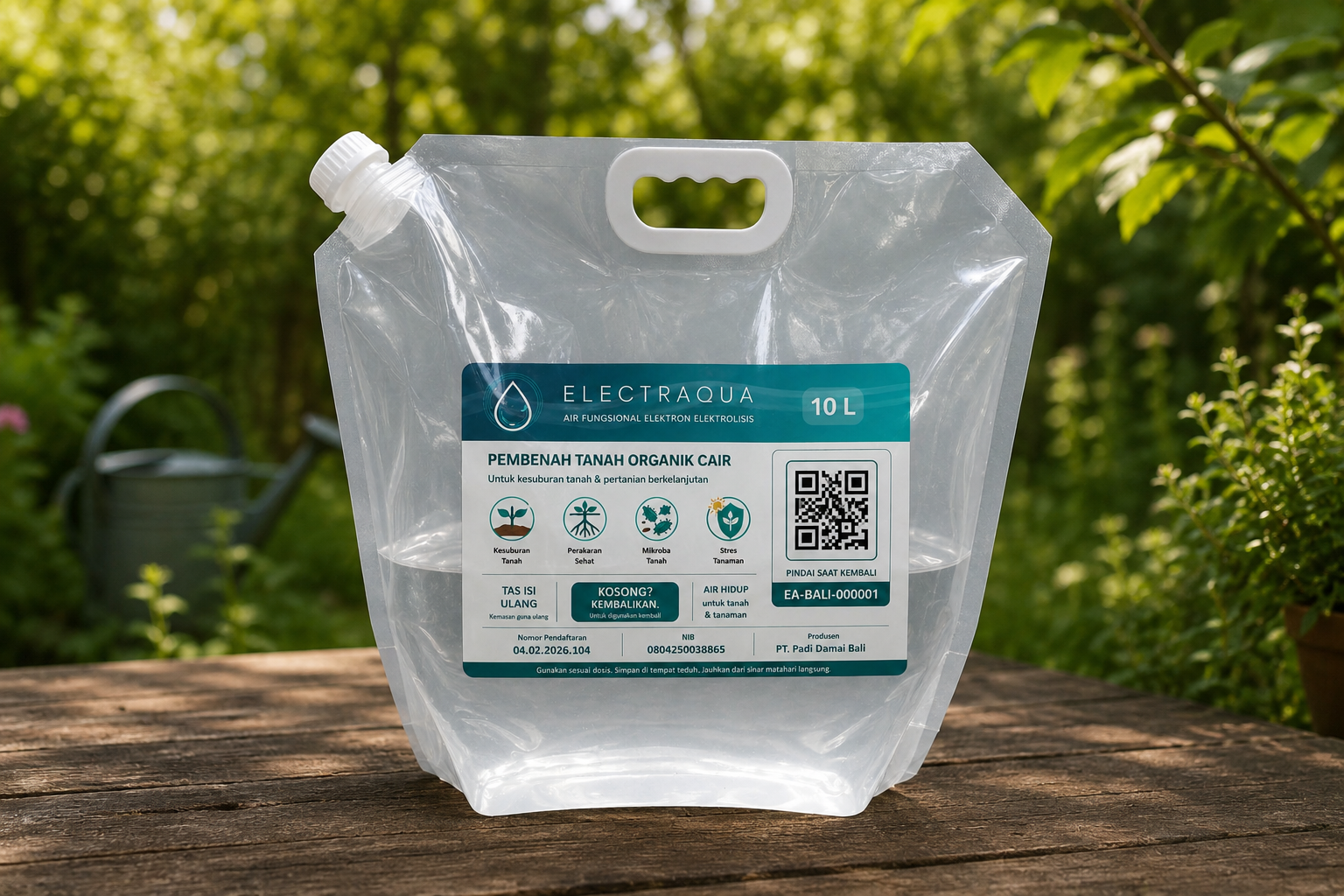
10L QR bag system
What it is
Not just a water product. A field protocol.
ELECTRAQUA is used through irrigation, seedling, and crop management routines to support soil condition, microbial vitality, root development, crop vigor, and practical transition toward lower-chemical farming.
We keep the language careful: each claim should come from field records, comparison photos, university reports, and farmer observations that can be checked over time.
Our philosophy
Respect the water. Restore the soil. Protect the Subak.
ELECTRAQUA supports a form of agriculture that respects Bali's Subak culture, restores the vitality of water, soil, microorganisms, and roots, and helps farmers grow food with less burden on people, land, and all living beings.
In this sense, ELECTRAQUA is regenerative not as a slogan, but as a practice: it begins with water, supports microorganisms, soil life, and roots, reduces dependence on harmful inputs, and respects the cultural irrigation system of Subak.
Bali field principle
No Harm Agriculture
For people, water, soil, microorganisms, roots, farmers, Subak culture, and all living beings.
Technical background
A long agricultural record, validated locally.
Later Global-ER materials by Yuichi Ota record roughly 15 years of agricultural practice across about 50,000ha, alongside overseas deployment of the generator technology. In Bali, that background is not treated as a guarantee. It is the reason to test carefully through Subak fields, harvest records, and farmer observations.
Bali field reality
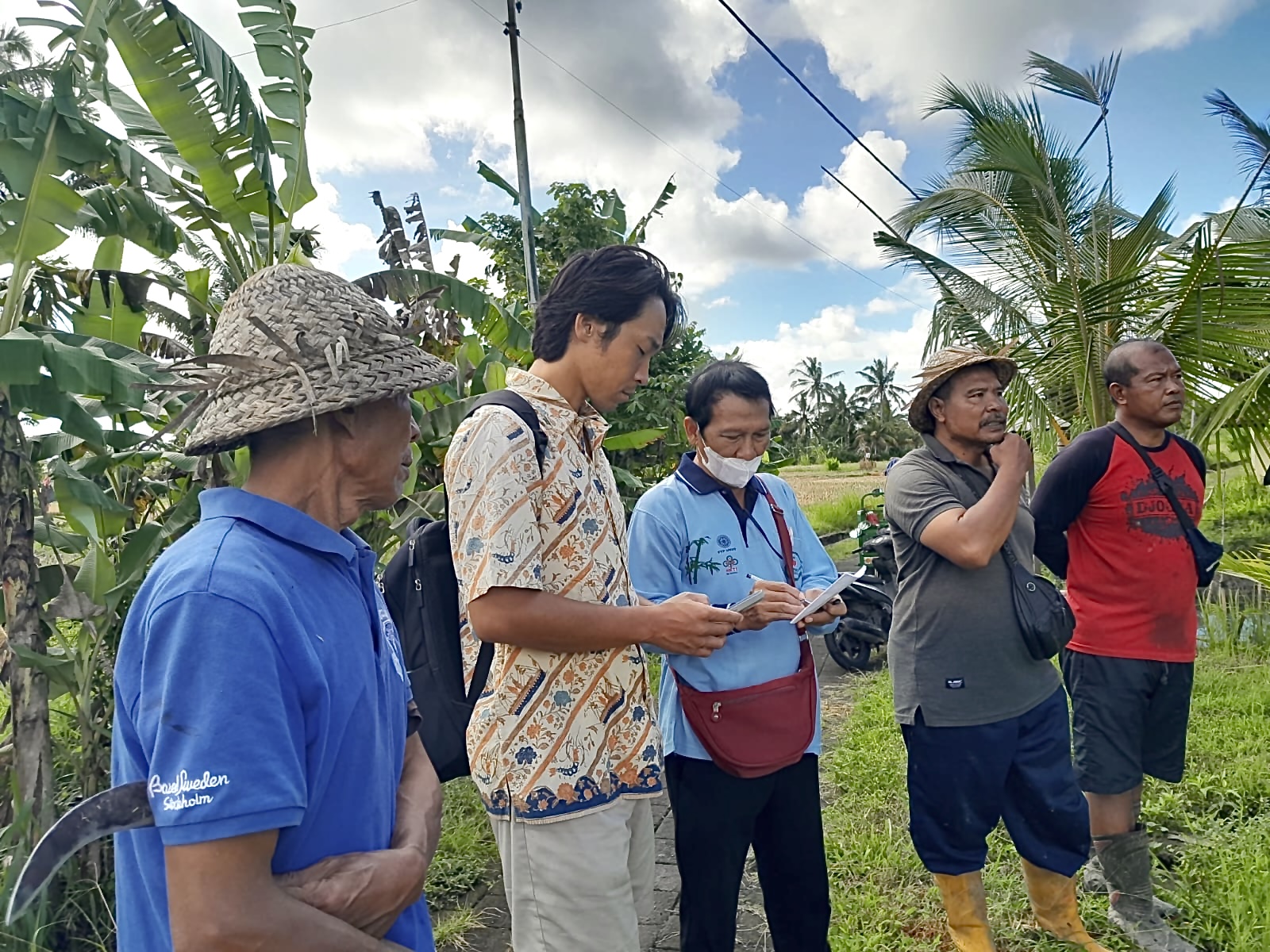
Subak is the operating system of the land.
ELECTRAQUA must fit Bali's actual agricultural structure: water flow, farmer trust, crop economics, cooperative distribution, and Subak decision-making.
Start small
1ha pilots before wider Subak expansion.
Record clearly
Bag ID, field, crop, date, photos, input cost, and harvest.
Scale responsibly
Expansion follows production capacity and measured results.
Field evidence
Early results worth testing carefully.
These data points are not presented as universal guarantees. They are the current evidence base for designing better pilots, better records, and better farmer decisions.
Shallot trial on Subak land
Authorized field trial by the Faculty of Agriculture, Universitas Udayana, at Subak Manuk, Desa Susut, Bangli. Crop: shallot. Period: Oct 2025 to Jan 2026.
- Yield
- 4,420 kg control to 8,940 kg treated
- Soil CEC
- Improved by about 42-43% in treated plots
- Profit
- Reported improvement from Rp 12.5m to Rp 90.6m
Rice field comparison
Aji's team recorded rice production at Subak Pulagan, Tampaksiring, Gianyar. This is field production analysis, separate from a replicated university trial.
- Conventional reference
- 5-6 ton/ha
- ELECTRAQUA only
- 8.8 ton/ha
- Urea + ELECTRAQUA
- 9.2 ton/ha
Rice yield component check
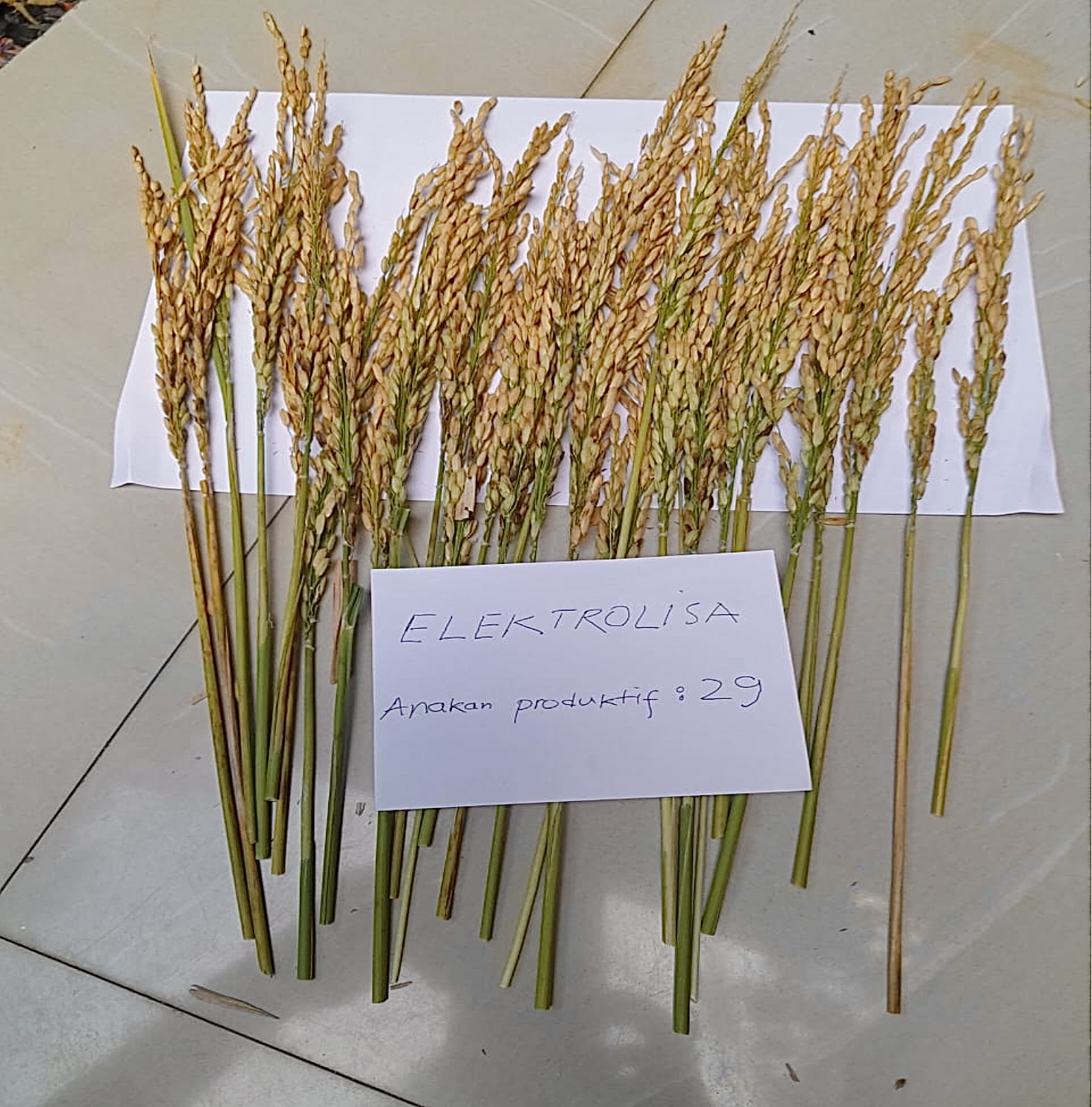
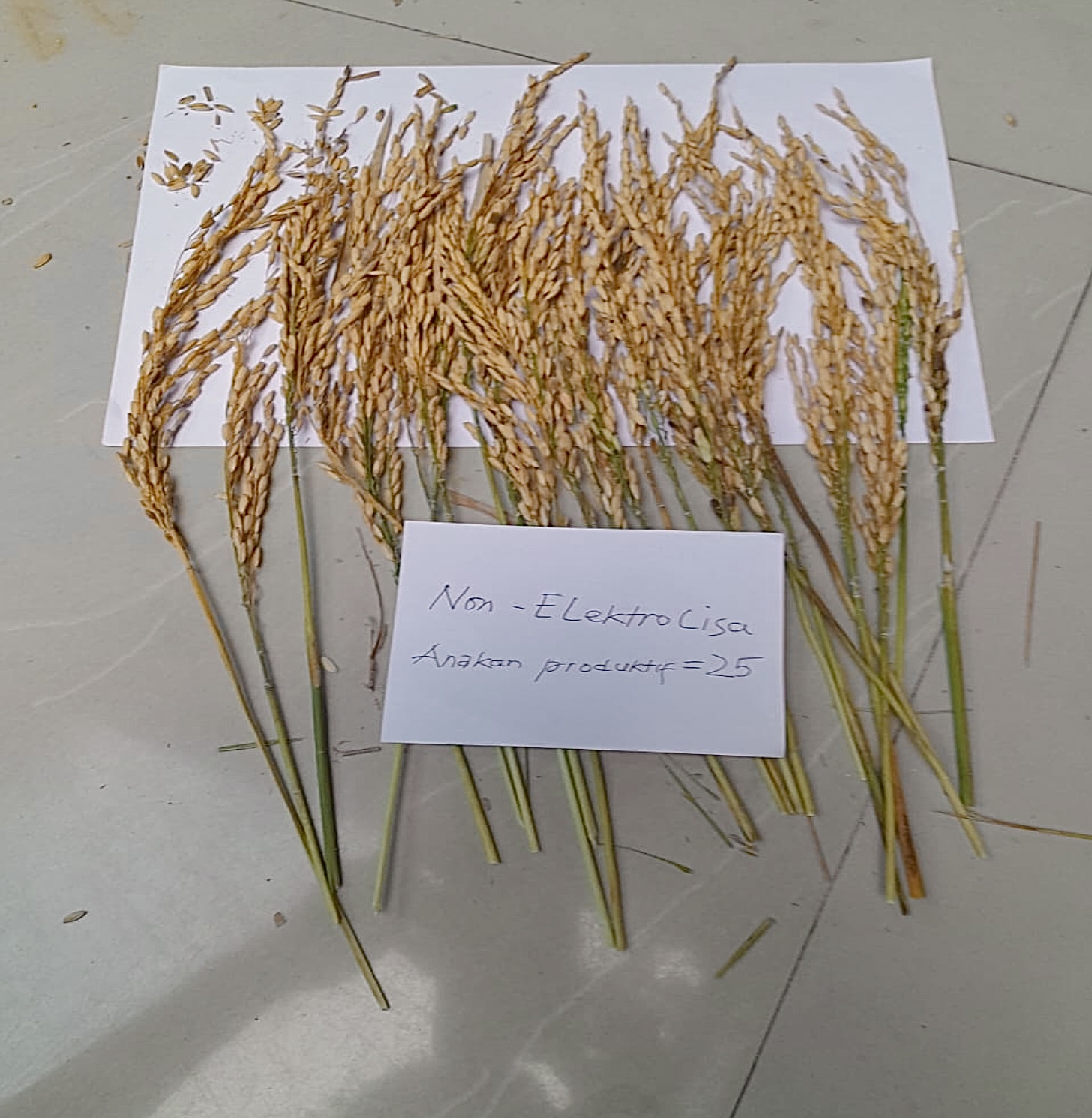
MRI and PT Tirta Cinta Alam compared full chemical fertilizer + ELECTRAQUA with full chemical fertilizer only at Subak Gepokan Bawah. This is a one-clump field component analysis, not a replicated trial.
- Productive tillers
- 25 to 29 per clump
- Grains / panicle
- 127 to 166 recorded
- 1000-grain weight
- 24.96g to 26.40g
- Component estimate
- 9.332 to 14.269 ton/ha after 15% deduction
Source: Analisa Produksi Padi dengan Input Elektrolisa di Subak Gepokan Bawah, MRI / PT Tirta Cinta Alam, Nov 2024. The ton/ha figure is a component estimate, not a whole-field harvest weight. Empty grain rate was higher in the ELECTRAQUA plot, so water management, fertilization, ripening conditions, and replication should be checked in the next trial.
Crop comparison photo
Visual records help farmers see what changed.
The photos below are field comparison records. They should be read together with field notes, treatment history, and harvest data.
Subak Pulagan, 2024 rice demo
Reported yield per hectare
Aji's January 2025 production analysis compared ELECTRAQUA plots with the previous conventional reference. This is field production analysis, separate from a replicated university trial.
Previous reference
5-6
ton/ha
ELECTRAQUA only
8.8
ton/ha, +47-76%
Urea + ELECTRAQUA
9.2
ton/ha, +53-84%
Source: Analisa Produksi Padi dengan Input Elektrolisa di Subak Pulagan, PT Padi Damai Bali / MRI, Jan 2025. Sampling: 2.5m x 2.5m ubinan.
Returnable packaging
10L bags with QR traceability.
Each returnable bag carries a unique Bag ID and QR code. The registry can record dispatch, field use, return, cleaning, refill, and retirement.
- Bag ID example: EA-BALI-000001
- QR pages connect physical bags to digital records
- Designed for reuse, recovery, and controlled field distribution
How pilots should run
Measure before expanding.
Baseline
Record Subak, field size, crop, water source, soil condition, fertilizer history, and photos before use.
Application
Record dilution, timing, volume, weather, field observations, and bag movement through the QR system.
Harvest review
Compare yield, crop quality, input cost, farmer feedback, and whether the result justifies repeat use.
Careful by design.
ELECTRAQUA is developed as an agricultural field project. We avoid unsupported claims and prioritize registered use, practical observation, and transparent communication with farmers, Subak leaders, cooperatives, and technical partners.